
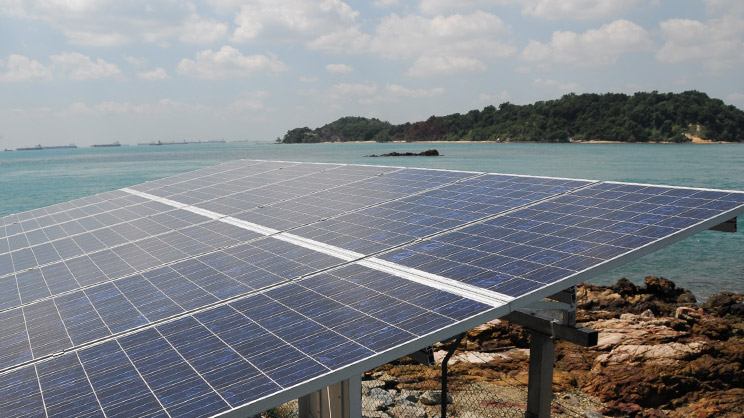
M1 is committed to doing our part for the environment, and we have over the years invested significant resources into more efficient mobile technology and lighting systems that helps cut down on our energy consumption, and even tapped on renewable energy sources like solar power for one of our offshore sites.
As part of this commitment, we commissioned a comprehensive study on our carbon footprint. The report, done in compliance with the ISO 14064-1(2006) standard for measuring, quantifying and reducing greenhouse gas emissions, includes both direct and indirect emissions from M1’s business activities. We have since implemented some of the report’s suggestions, such as the use of more energy efficient lights, and will continue to explore ways to further reduce our energy consumption and conserve our environment.
Power conservation
We completed our 2G base station network modernisation programme last year, replacing all 1,200 of our 2G base stations with new multi-radio ones and reducing this network’s carbon footprint by about 35%.
The power efficient new base stations, which also do not require air-conditioning, have reduced the daily power consumption of each site by 15.7kWh. Over a year, this reduces the power consumption for our entire network by 35% or 6,876,600kWh – enough to power 1,300 five-room HDB flats over the same period. Based on 26.98 cents per kWh, M1 will also enjoy financial savings to the tune of S$1.8 million a year on its energy bill.
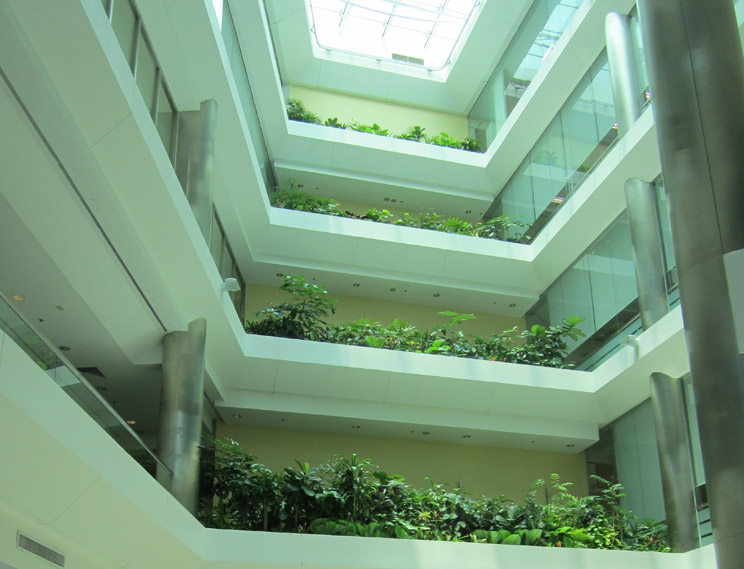
M1’s corporate buildings, our Main Operating Centre and MiWorld Building at the International Business Park, have been specifically designed to maximise natural lighting, and this reduces our dependency on artificial lights. The temperature and operating hours for air-conditioning of our corporate buildings were optimised and reduced by an hour every day, and air-conditioning is switched off completely over the weekend in unoccupied office areas. All these initiatives contribute to a further reduction of our energy consumption.
Another conservation project that M1 started in 2011 and which was recently completed involved the replacement of 2,300 fluorescent lights in our MiWorld Building with LED (light-emitting diode) bulbs. The use of these power-saving lights is expected to reduce the building’s lighting consumption by 40% or 135,000kWh. Upon completion of an evaluation of the results of the LED light project, M1 will consider rolling it out to our other buildings and sites.
Our building facility maintenance staff also conduct regular inspections to optimise lighting levels and remove unnecessary lighting fixtures. To date, we have removed 400 bulbs of various types and sizes, yielding energy savings of 87,775kWh annually, without compromising our productivity levels.
Renewable energy
M1 maintains three offshore base stations, at Raffles Lighthouse, St. John’s Island and Pulau Tekong. As these islands are not connected to Singapore’s energy grid, these base stations have historically been powered by diesel generators.
Following a feasibility study, M1 commissioned Singapore’s first offshore solar power generation system, at our Raffles Lighthouse base station. The new solar system can produce up to 2.5kW under optimal weather conditions, reducing the use of diesel at this site by about 80%, or about 50 litres of diesel, daily.